
Oakland Park Previous Resident Sources
A backward address trail crosses several custodians. Broward County Property Appraiser records give the present starting point. Broward Official Records supplies recorded transfers, while older books and images continue at Search and Copy Services. Directories and released census schedules move from owners to past residents. The verified limits below prevent an online cutoff from being read as the date records began.
| Source | Years It Covers | Where Held | What It Shows |
|---|---|---|---|
| Official Records party index | Fully searchable from July 7, 1977 to present | Broward Acclaim Web | Grantor, grantee, deed type, date, instrument, and linked images when available |
| Limited older Acclaim index | March 9, 1972 to July 7, 1977 | Broward Acclaim Web | Instrument, O-book/page, and record date, not dependable name search |
| Older ownership records | Real-property documents since 1883 | Search and Copy, Room 114 | Earlier deed chain through written or in-person named-year searches |
| Federal census | Public through 1950 | NARA and library databases | Enumerated household after address and district matching |
| Directories and phone books | Verified broader Fort Lauderdale runs, not a complete Oakland Park run | State, Library of Congress, and Broward libraries | Listed occupants between census years |
For any era, start by fixing the parcel identity. A street number can change, a structure can be rebuilt, and a postal label can differ from city limits. The folio and legal description are more stable keys. For recent transfers use the online index and image. Across the digital boundary, ask Search and Copy for named years. For households rather than title, turn to directories, census records, local newspapers, and probate only after the address is reconciled.
Start Oakland Park Resident Address History
The BCPA Property Search accepts a name, address, or folio, with an optional Oakland Park city filter. Save the owner name, property or situs address, mailing address, folio, legal description, and latest sales rows. “Situs” means the parcel's physical location. The owner's mailing address is where tax correspondence goes and may lead somewhere else.
The parcel card can contain deed instrument references, sale dates, classifications, values, exemptions, a building sketch, and photographs. It establishes the current assessment record, not everyone in the home. Even a homestead flag supports only an owner-occupancy inference. It does not name every person who lived there.
The manifest's sample Oakland Park parcel record shows the starting screen used to capture stable identifiers.
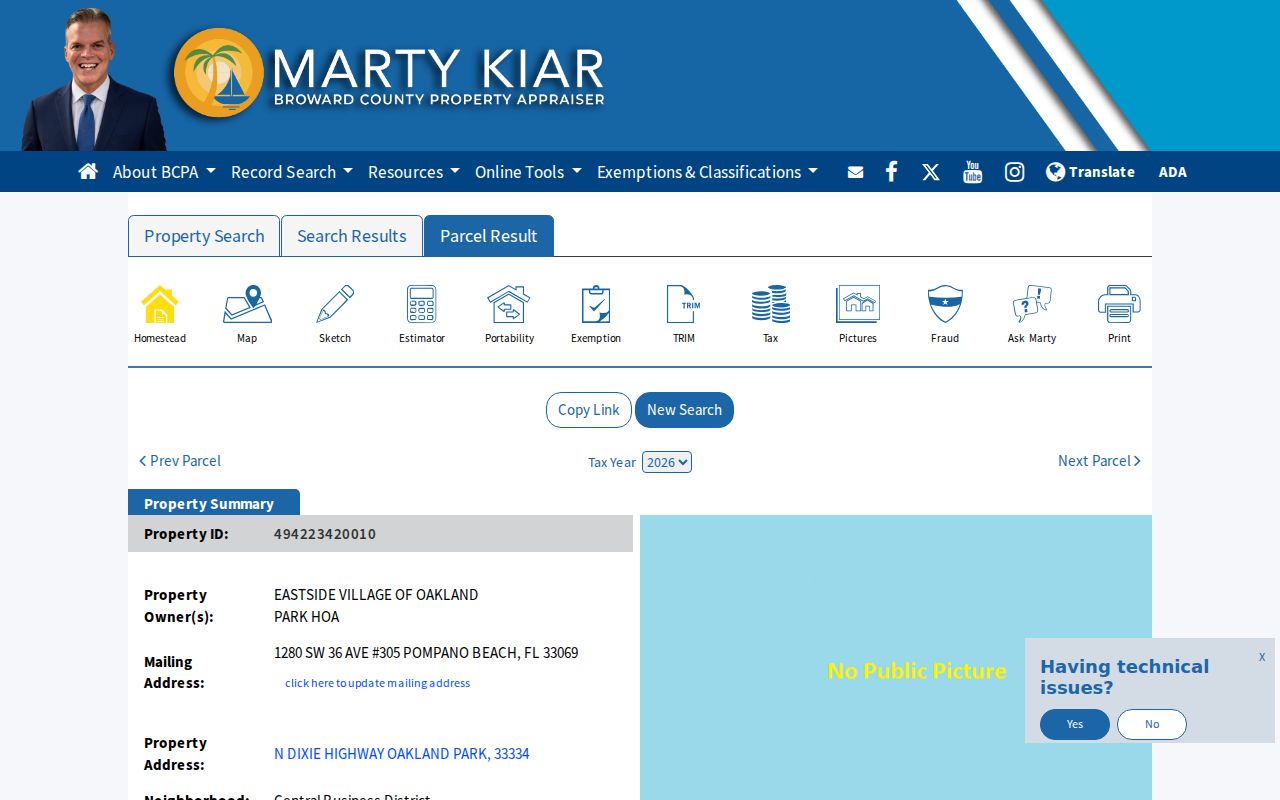
Its parcel details separate the site's location from owner and mailing fields, the distinction needed before moving backward.
Trace Oakland Park Resident Deed Owners
Broward indexes recorded instruments mainly by party, not by street address. That makes the BCPA owner name and acquisition instrument the bridge into Official Records. Read each deed rather than relying on a results line. Match the legal description, parcel reference, transaction date, and roles before adding a person to the ownership chain.
- Copy the current owner, folio, legal description, and newest deed reference from BCPA.
- Open that purchase deed in Broward Official Records and identify seller and buyer.
- Search the seller as an earlier grantee, narrowing by deed type and date.
- Repeat while the parcel's legal description continues to match.
- When name searching ends, request older named-year work from Search and Copy.
- Grantor and grantee
- The grantor transfers an interest; the grantee receives it.
- Chain of title
- The linked sequence of transfers for the same property.
- Legal description
- The recorded land description used to distinguish the parcel when a street name or number changes.
Oakland Park Past Resident Deeds
The county describes its public index as January 1, 1978 to present, while the live system gives a precise fully searchable start on July 7, 1977. A limited segment from March 1972 to that cutoff can be searched only through instrument number, O-book and page, or record date. Online document images begin August 24, 1998. These are access boundaries, not evidence gaps.
Pre-1978 records are not computerized. Broward says real-property ownership documents reach back to 1883. Search and Copy at 115 S. Andrews Avenue, Room 114, Fort Lauderdale accepts in-person or written search requests, not phone, fax, or email searches. The stated charge is $2 per name for each year searched, $1 per copied page, and $2 for certification. Verify the payment directions before mailing.
The county's deed-chain instructions explain that owner-first route.
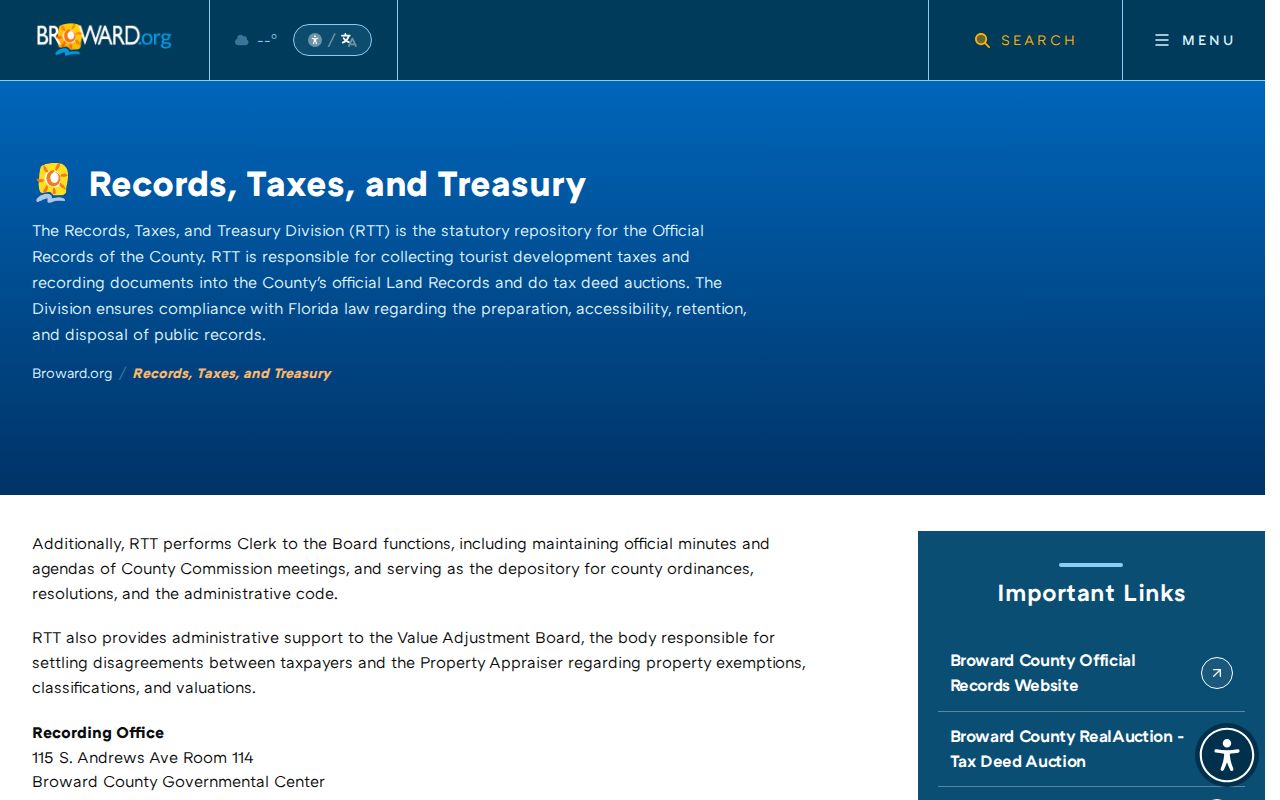
The captured page reinforces the key fallback: when a deed image or searchable name is absent online, continue through the county's older-record service.
Note: Save the instrument number and book-page reference whenever shown, because those keys can cross an online name-search boundary.
Oakland Park Previous Resident Names
Place names can break an otherwise sound search. The area was called Colohatchee before the 1920s, became part of the larger Floranada town in 1925, and emerged as Oakland Park in 1929. Early records beyond the small 1929 city limits may be labeled Fort Lauderdale, Broward County, or a later municipality. Search each term and keep the date and exact geography beside the result.
Roads add a second trap. City history identifies Ocean Boulevard as today's Oakland Park Boulevard and also notes a separate older Oakland Boulevard at NE 34th Court. Preserve the address exactly as printed. Then compare a plat, legal description, census enumeration district, cross street, or mapped parcel before treating the old and new forms as one place.
The Floranada change is a local history story with practical effect. It explains why former occupants may disappear from an Oakland Park search while remaining visible in a regional directory, deed, school item, or newspaper notice.
Oakland Park Past Resident Households
Owners are only part of a past-resident search. A criss-cross section, when a volume has one, lists streets and house numbers with an occupant or subscriber. Alphabetical directories can add a spouse, work detail, and residence. The verified collections and their gaps are covered on the Oakland Park city directory page.
Pair directory years with the nearest public census. Under the 72-year rule, the 1950 schedule is the latest released population census as of 2026. Keep each step distinct: address in one directory, household in the census, then a return to the next directory year.
- Normalize the street, but save every old form and number.
- Read the address section and all matching adult surnames.
- Locate the correct census enumeration district and household.
- Compare relationships and ages without forcing spelling to match.
- Use the next directory, newspaper, or deed to test the timeline.
Absence is not proof that a household left. A missed canvass, an unlisted phone, a move between publication dates, or a boundary label can remove a name. Treat first and last appearances as time brackets until another source tightens them.
Lawful use. Research former Oakland Park occupants for house history, family history, or estate questions. Never use a record trail to stalk, harass, or harm a living person.
Close Oakland Park Resident Trails
A deed from an estate or personal representative may point toward probate. Broward court archives preserve older court and marriage material, while probate files can identify a decedent, representative, named heirs, and case events. Court names alone do not prove residence, so connect the case to the same owner, legal description, address, or family evidence.
The Broward Clerk Archives image assigned to this page shows the separate court-record access route.
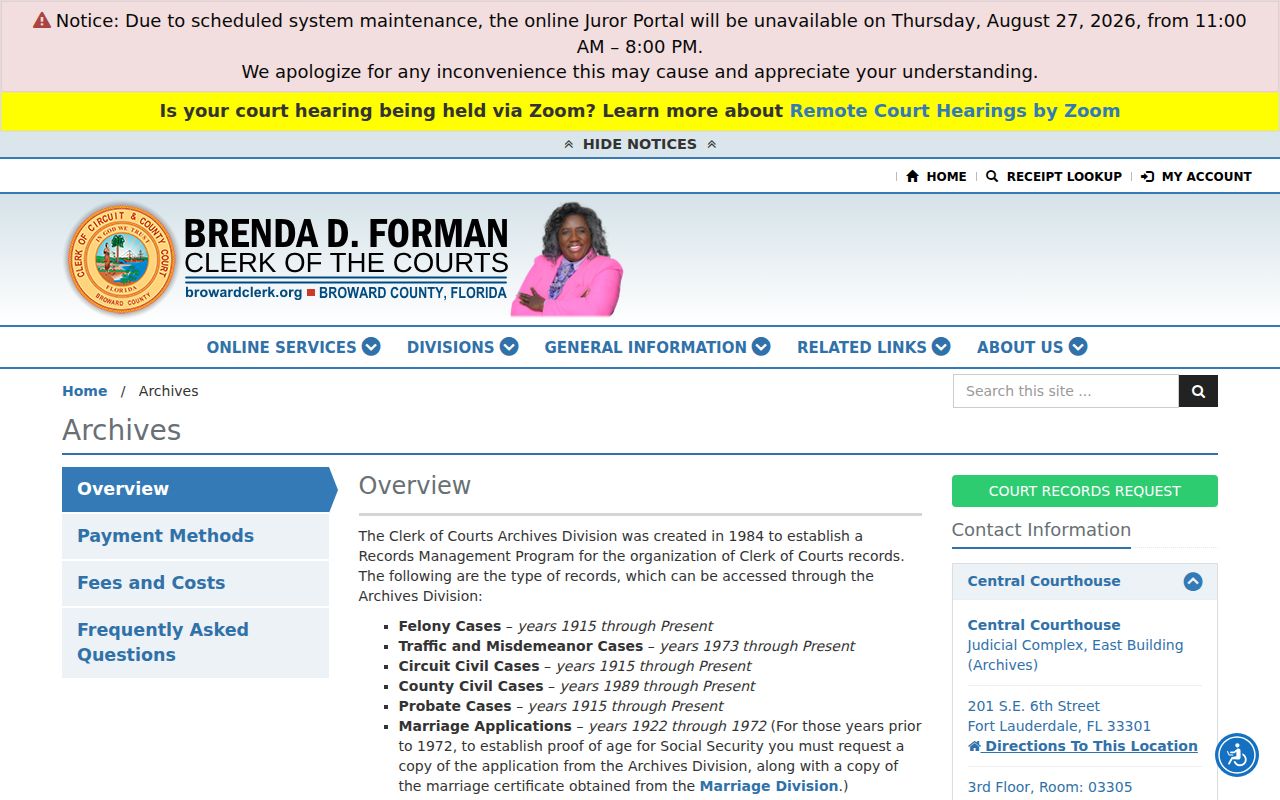
It belongs at the trail's endpoint, after the parcel and deed establish which person and property are involved.
Obituaries can add relatives, prior communities, schools, clubs, and a burial place. Broward Main Library periodicals staff accept targeted out-of-area article requests. Give the full name, approximate date, and known Oakland Park link. This human-use path can connect a deceased former resident to heirs without relying on commercial people-finder compilations.
Oakland Park Resident History Archives
The Library of Congress explains how city and telephone directories can be located when the city is filed inside a larger regional title.
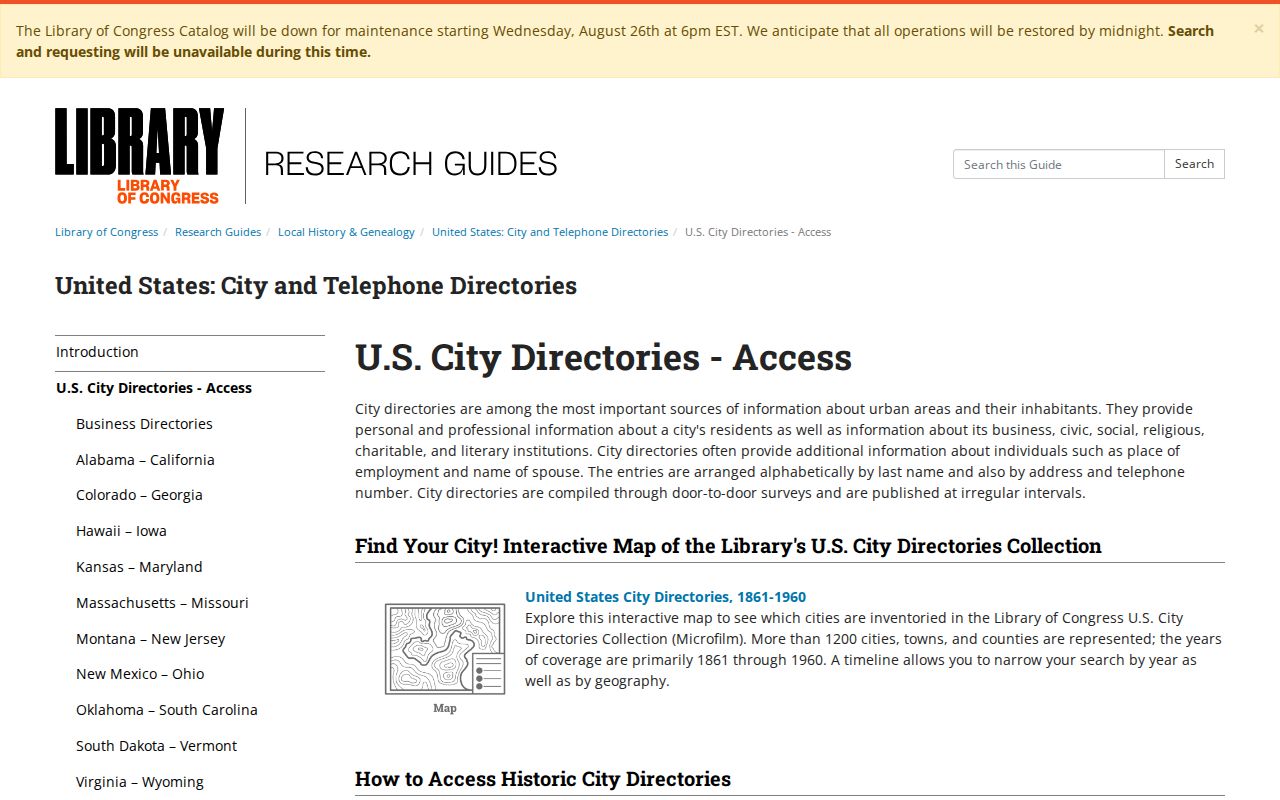
That guidance supports searching Fort Lauderdale and vicinity titles, but it does not prove continuous Oakland Park coverage in any run.
For a wider catalog fallback, the Florida State Archives gateway connects researchers to state manuscript and government collections.
Use state archives after the local name, date, address, and agency are known. A precise request is more likely to locate a useful series or finding aid.
Digital Sanborn Maps are available through Broward Library's NSU partner access, though exact Oakland Park sheet years were not verified. They may show building footprints, uses, and street labels. Treat them as structural evidence, never as a resident list. Likewise, city permits can date work and name an owner, applicant, or contractor, but those roles do not prove occupancy.